
When, Where & How to Catch Them
By John Piotrowski
Few places in the world offer sail fishing as consistently electric as the waters off our coast, where the Gulf Stream presses tight against the continental shelf and the winter north winds set the stage for one of sportfishing’s most iconic battles.
From November through April, Southeast Florida becomes sailfish country. Cold fronts slide down the peninsula, northeast winds stiffen, and packs of Atlantic sailfish migrate south along the edge, riding temperature breaks and current lines just a few miles offshore. On the right day, anglers can be fighting fish four at a time within a mile of shore. In the last few years, record catches of upwards of almost 70 sailfish in a day have been caught by a single boat.
The Perfect Setup
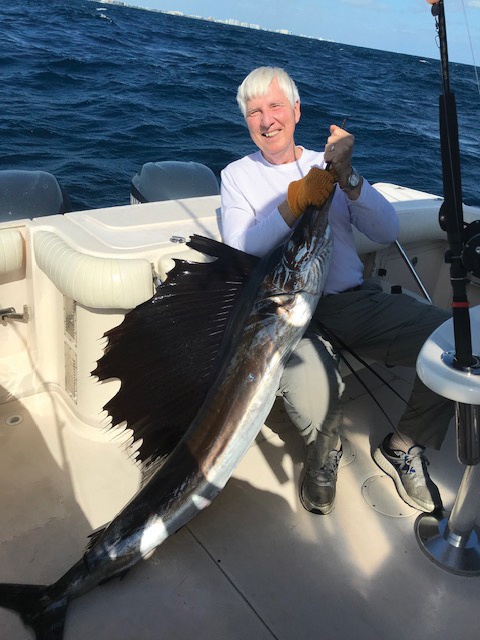
What makes our coast especially good for sailfish is the fact that the Gulf Stream can be as close as two to three miles off the beach, putting world-class pelagic fishing within reach of half-day trips. The water depths jump quickly from 100 feet to 700, creating a natural funnel for baitfish like goggle-eyes, threadfin herring, and pilchards, which are all prime sailfish snacks. Kite fishing reigns supreme here out of the Hillsboro Inlet. Dual kites spread live baits across the surface, skipping and splashing just enough to trigger aggressive strikes. When a sail lights up behind a bait, dorsal fin glowing neon blue and purple, time slows — then chaos erupts as the line comes tight and the fish greyhounds across the waves.
Light Tackle Can Work
Southeast Florida sailfish are typically smaller than their Pacific cousins, averaging 50–80 pounds. But what they lack in size, they make up for in speed and acrobatics. We usually favor 20 and 30-pound class tackle, circle hooks, and non-offset rigs, making the fishery both thrilling and conservation-minded. Multiple hookups are common during peak conditions. It’s not unusual to see three or four sails lit up behind the spread, each angler calling shots as the captain maneuvers to keep lines clear. Communication, teamwork, and quick reactions are everything. Sailfish usually run in packs and feed into the current. Sometimes it pays to pull everything in and run up current or ahead of a pack, free jumping to get a chance at a bite.
Conditions Are King
The best sailfish days often follow a cold front. North or northeast winds push bait tight to the edge, seas stack just enough to give the kites lift, and water temperatures dip into the low 70s. If you can find a strong northbound current and a defined color change, you might just have textbook conditions. Even on slower days, the possibility is always there. One shadow, one flash of a dorsal, and suddenly the ocean feels very small.
A Fishery with Competition and Spirit
Sail fishing from the Palm Beaches down to the Florida Keys isn’t just about numbers — it’s about tradition. Generations of captains have refined techniques here, sharing dock tales about wind angles, leader lengths, and which bait swims best on the long kite line. Some of the most competitive sail fishing tournaments in the world are held right here. There is nothing like experiencing the line of sportfishing boats coming through the inlet with their release flags fluttering in the wind off the outriggers. Be on the lookout for popular tournaments such as The Miami Billfish Championship, The Cove Billfish Tournament, The Sailfish Challenge, Quest for the Crest Series, Jimmy Johnson’s Quest for the Ring in March and many more. Oftentimes, this show of success draws a standing ovation from onlookers, including fishermen and folks along the docks. For anglers chasing their first sailfish or veterans looking for consistent action, winter in Southeast Florida delivers. There is nothing like the unmistakable sight of a sailfish dancing across the surface.
For more fishing information, tournament insight or just great camaraderie, please check out the Lighthouse Point Saltwater Sportsman’s Association. www.LHPSSA.org