
No Thanks!
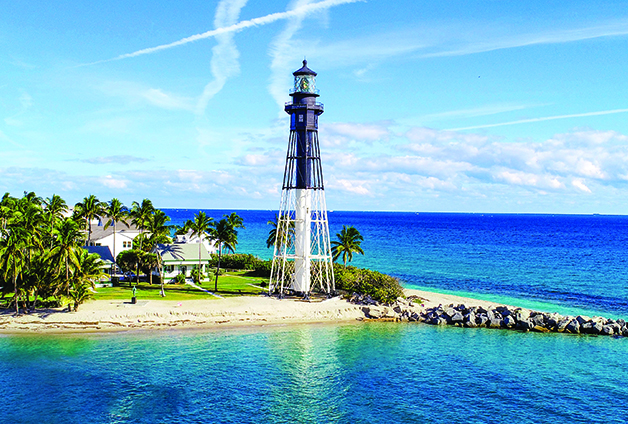
At the mouth of the Hillsboro Inlet resides our community’s crown jewel, aptly nicknamed
“The Big Diamond” after the shape of the glass on the outside of the lantern room, which sits
175 steps above the sand and breaking waves below. Whether you were born and raised in our corner of South Florida, a snowbird or a new resident, you more than likely have some affinity for our community’s unofficial mascot. Frankly, I think it is kind of already our official mascot, but I’m not sure who’s in charge of the mascot department, so I could not reach them for official confirmation.
Even without presumed mascot status, the Hillsboro Lighthouse remains a beacon, pun intended, for memorable moments that some treasure for a lifetime. The number of engagements, marriages and first illicit beers on the sandbar are surely incalculable. It’s simultaneously a gathering place and a symbol; seeing that familiar beam of light swing in your direction on a clear night grounds you and reminds you that you’re home.
Why Now?
Unfortunately, this pillar of our community is under threat by the very forces that we frequently enjoy in South Florida; the salt air and the sea spray might be restorative to our psyche, but the lighthouse doesn’t appreciate it the same way. Simply put, it isn’t cheap to have a century-old iron structure directly on the water; many of our readers know it isn’t cheap to have a brand-new structure directly on the water. To add insult to injury, the lighthouse can’t even get a job babysitting to pay for the repairs, not that a part-time job could even scratch the surface of what is needed.
Immediately, the lighthouse is in need of $1.8 million for repairs, of which the Hillsboro Lighthouse Preservation Society has already raised around $500,000. “We have a functioning lighthouse and we have the chance to take care of it right now; it’s been there for over 100 years and there’s no reason that we can’t put some money away and let them have an income stream… to take care of it forever,” said Jane Wye, whose foundation has supported lighthouse restoration projects in the past.
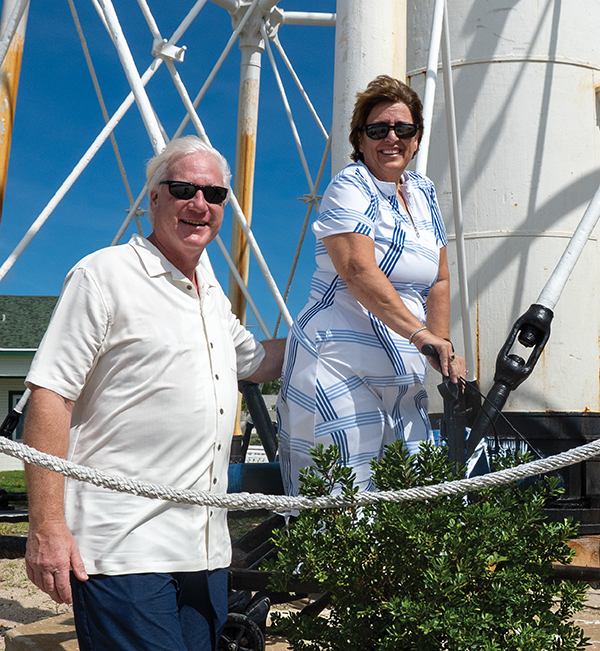
The income stream she’s referring to would come from the preservation society’s second fundraising goal: an endowment that would fund future restoration projects and regular maintenance without the need for piecemeal contributions. While there are immediate, pressing repairs slated to begin, responsible stewardship of our physical history constantly requires cold, hard cash. A century-old structure directly exposed to the harsh extremes that come from being placed to weather the brunt of the Atlantic Ocean’s fury regularly requires a hefty sum.
“I think the real problem is that everybody assumes the government takes care of it,” said Wye. In the 1990s, the United States Coast Guard relinquished its stewardship of the lighthouse, which is when the Hillsboro Lighthouse Preservation Society was born. While the Coast Guard still technically owns the Lighthouse, the lighthouse isn’t needed anymore for nautical navigational purposes, so local stewardship was required to step in, lest the lighthouse fall into disrepair.
Even with the preservation society’s watchful eye, maintaining something so many people take for granted comes with an ongoing challenge: finding the money to keep it going. “They hope people buy the bricks, they hope people go to the gala. It’s always a struggle to get operating costs,” said Wye.
The lighthouse has endured hurricanes, shifting coastlines, changing technology and more than a century of South Florida weather. Its continued existence is a testament to the people who have recognized its value and made sure it remains standing. Now, the responsibility falls to the community.
Preserving the Hillsboro Lighthouse is about more than keeping an old iron tower from rusting away. It’s about protecting a piece of shared identity, a landmark that has watched generations come and go while the shoreline around it has changed. It’s about ensuring future residents can stand on the beach, spot that familiar beam sweeping across the water, and feel the same connection to home that so many do today.
The good news is that while the lighthouse’s past is most certainly set in stone, its future is not yet written. The preservation society has already made meaningful progress toward its immediate fundraising goal, but it cannot do the work alone. Whether through donations, attending fundraising events or simply spreading the word, every bit of support helps keep our crown jewel sparkling.
We may not know who officially oversees the mascot department, but perhaps that’s beside the point. The Big Diamond belongs to everyone. And if it’s going to keep watching over this little corner of the coast for another hundred years, it’s time to show it a little love in return.
The Preservation Movement
One of the most important chapters in the lighthouse’s history began in the early 1990s. In 1992, the mechanism that rotated the original Fresnel lens failed. A smaller temporary beacon was installed while the historic lighting system was taken out of service.
The failure created a difficult question: should the Coast Guard repair the aging lens, or remove it and replace it with more modern equipment? A study recommended removing the historic lens, prompting backlash from local residents who recognized its historical and sentimental value. In response, community members organized to protect the lighthouse’s original equipment. The Hillsboro Lighthouse Preservation Society was founded in October 1997 to help preserve the station, restore the historic lens, and expand opportunities for public education and access.
Restoration required careful work. The original rotating mechanism used approximately 400 pounds of mercury to support and facilitate the lens’s movement. Because mercury is toxic, it had to be removed and replaced with a safer mechanical arrangement. Restoration work also addressed the tower’s exterior, including the removal of hazardous lead-based paint and the application of a protective coating.
After extensive efforts involving the Coast Guard, engineers and preservation supporters, the original Fresnel lens returned to operation in 2000. Its restoration represented a major milestone for those who believed the lighthouse’s historic technology should remain in its original setting rather than be replaced entirely.
A Historic Landmark for Future Generations
The lighthouse was listed on the National Register of Historic Places on February 16, 1979, recognizing its importance as a historic maritime structure. Its significance extends beyond its distinctive architecture: it represents more than a century of technological development, coastal engineering, public service and community involvement.
Today, the Hillsboro Lighthouse Preservation Society has continued to support the station’s preservation and educational mission. Volunteers have helped maintain the historic lens, care for the grounds and make the lighthouse accessible through tours. The Coast Guard continues to own the lighthouse, while preservation efforts help protect its historic features and share its story with the public.
Visitors who reach the station can experience a structure that has witnessed extraordinary changes in South Florida. The remote shoreline that once surrounded the tower has been transformed by coastal development, yet the lighthouse remains the most prominent and recognized structure for miles. Its black-and-white tower continues to stand out against the ocean and sky, just as its builders intended.
The lighthouse also serves as a reminder that maritime history is not simply a story of ships and trade. It is a reminder that real people had to live, work and die in extreme conditions so that others could lead normal, land-based lives. In recent years, it’s become a reminder of what a community can do when it decides something is important and what can be done together when the future becomes uncertain.
Today, the Hillsboro Inlet Lighthouse stands as both a working navigational aid and a living monument to history. Its light continues to connect the present with the generations of keepers, mariners, engineers and preservationists whose efforts have kept this remarkable landmark shining.
Repair Needs
- As an aging landmark, the lighthouse requires ongoing repairs, corrosion control and component replacements to preserve it for future generations.
- Radial and circumferential struts
- Upper level cross members
- Tension Rods
- Turnbuckles
- Tower, gallery walkway, and lantern room
- Re-glaze (glass replacement and application of new glazing components) lantern room with new high-velocity hurricane zone glass rated for small missile impact resistance, cyclic loading, and water infiltration.
- Remove existing coatings on all structures (tower, columns, struts, tension rods, turnbuckles, components, glazing frames) to bare metal. Capture and safely remove.
- Recoat (paint) all structure surfaces in a high-performance three (3) step process: wasser primer, intermediate coat, and finish coat. Return “Daymark” to original 3-black upper/2-white lower color scheme.
- Re-condition and coat entry platform and new railings.
- Referencing all the work noted above: Scaffolding top to bottom with continuous weather shroud to capture all removals, prevent salt air intrusion during all work processes and ensure proper performance of all new components and coatings.
The History
Towering above the Atlantic Ocean on the northern side of Hillsboro Inlet, the Hillsboro Inlet Lighthouse is one of the state’s most recognizable maritime landmarks. With its distinctive black-and-white iron tower and commanding view of the coastline, the lighthouse has guided mariners for more than a century. Its history reflects the growth of South Florida; while just about everything in its gaze has changed, the lighthouse has remained steadfast at its post, guiding mariners for more than a century.
First illuminated in 1907, the lighthouse was built to address a serious navigational hazard along Florida’s coast. Since then, it has survived hurricanes, technological changes, periods of uncertainty and has undergone several major restoration efforts. Today, it remains both an active aid to navigation and an important historical attraction.
The Need for a Lighthouse
During the nineteenth century, Florida’s southeastern coastline was far less developed than today. Much of the region consisted of stretches of desolate shoreline and mangrove forests. Ships traveling along the Atlantic coast faced numerous challenges, including shifting sandbars, reefs, strong currents and narrow inlets that could be difficult to identify, especially at night or during poor weather.
The stretch of coastline between established navigational lights farther north and south was a significant challenge for mariners. Sailors and local interests recognized the need for a lighthouse near the inlet – losing sight of one light before coming under the gaze of another could be a recipe for disaster in those days.
The federal government began formally considering the issue during the nineteenth century. In 1855, an inspection of the nation’s waterways identified Hillsboro Inlet as a potential place for a new lighthouse. Recommendations were made to establish a lighthouse in the area, but decades passed before the project received sufficient funding and support.
As maritime traffic increased and South Florida began developing in the late nineteenth and early twentieth centuries, the need became more urgent. Congress approved funding through several measures between 1902 and 1904, eventually allocating a total of $90,000 for the project.
Construction and Design
The lighthouse was designed to withstand the challenging conditions of the Atlantic coastline. In 1905, the Russell Wheel and Foundry Company of Detroit, Michigan, received the contract to manufacture the iron tower. The structure was prefabricated, meaning its components were manufactured elsewhere and transported to the remote coastal site for assembly.
The tower was built as an octagonal, pyramidal iron skeleton surrounding a central stair cylinder. Its open framework reduced the resistance of the structure to wind, an important consideration in a region exposed to tropical storms and hurricanes. The tower rises approximately 137 feet to the light, with its highest point reaching 147 feet from the ground below.
The lighthouse’s optical equipment was manufactured by Barbier, Bénard et Turenne in Paris, France, a renowned manufacturer of lighthouse lenses, for a cost not to exceed $7,250. The original second-order Fresnel lens was a remarkable piece of engineering, designed to concentrate light into a powerful beam visible across a considerable distance.
The distinctive paint scheme became one of the lighthouse’s most recognizable features. Its lower section was painted white, while the upper portion was black. This contrast helped sailors identify the tower during daylight, when the beacon itself was not visible. Known as a daymark, the paint pattern served as a visual navigational aid in addition to the light’s nighttime function.
The First Light in 1907
The Hillsboro Inlet Lighthouse officially entered service in March 1907. Its first keeper, Alfred A. Berghell, arrived with two assistant keepers, Henry A. Keys and Robert H. Thompson. These men were responsible for maintaining the light, inspecting equipment, caring for the station and ensuring that the beacon operated reliably every night. In the lighthouse’s early years, the light was powered by an incandescent oil-vapor lamp. The lamp worked in combination with the Fresnel lens to produce a distinctive flashing signal. Unlike an ordinary glass lens, a Fresnel lens uses a series of carefully arranged glass prisms and rings to direct light into a concentrated beam without requiring an enormously thick, heavy piece of glass.
Mariners could use its characteristic flash to distinguish Hillsboro Inlet from other coastal lights and determine their position more confidently. Operating the station required discipline and a considerable amount of physical labor. Before modern electrical systems and automation, keepers had to monitor the fuel supply, maintain the lamp and turning mechanism, clean the optical equipment and inspect the tower and surrounding grounds. Their work was essential to maritime safety, and failures could put ships and their crews at serious risk.
The Lighthouse Keepers
For the first several decades, the lighthouse station was more than a tower. It was a working community in which keepers and their families lived, worked, and faced the challenges of an isolated coastal environment.
Among the most notable keepers was Thomas Knight, who served as head keeper from 1911 until his retirement at the end of 1936. Knight earned recognition for his work and for rescues involving ships and seaplanes. His career illustrates the broader responsibilities lighthouse keepers sometimes assumed when maritime emergencies occurred.
The keepers’ duties extended beyond tending the lamp. They maintained station buildings, monitored weather and equipment and helped ensure that the light remained dependable through storms and changing sea conditions. Living at a remote station also required resourcefulness, as supplies and assistance could be difficult to obtain.
Hurricanes presented one of the greatest recurring threats. Major storms struck the South Florida coast in 1926 and 1928, damaging station buildings, uprooting trees, and altering the surrounding shoreline. The 1926 hurricane was particularly severe, exposing the lighthouse’s foundation and demonstrating how vulnerable coastal infrastructure could be to erosion and storm surge.
In response to the continuing threat of erosion, a stone breakwater approximately 260 feet long was constructed in 1930. The barrier helped stabilize the land near the tower and protect its foundations from the relentless action of waves and currents. The work was an important part of preserving the lighthouse’s structural integrity.
Modernization and the United States Coast Guard
As technology advanced, the lighthouse gradually moved away from labor-intensive practices. The light was electrified in the 1920s, replacing the original oil-vapor lighting system with electric illumination. In 1939, the United States Lighthouse Service was transferred to the United States Coast Guard. The change brought lighthouse operations under the Coast Guard’s responsibilities for maritime safety and navigation. At Hillsboro, the traditional civilian keeper system gave way to Coast Guard personnel overseeing the station.
During World War II, the waters off Florida were strategically important for commercial shipping and military operations. In 1942, the tanker Lubrofol was torpedoed off Hillsboro Beach, highlighting the dangers faced by vessels traveling along the coast during wartime. In the years after the war, a radio beacon was also installed to provide another navigational aid for mariners.
By the mid 1970’s, the lighthouse had been automated. Automation meant that personnel no longer needed to maintain the light through the same continuous, hands-on routines required in the early twentieth century. Nevertheless, the tower and its equipment still required inspection, maintenance and repairs to remain operational.
Hillsboro Lighthouse Gala
When: Saturday, March 20, 2027 | 6pm – 11pm
Where: Hillsboro Lighthouse, 907 Hillsboro Mile, Hillsboro Beach
Price: $400/Individual; $3,150/Table of 8
Details: Celebrate the history of the Hillsboro Lighthouse Station and the mariners who rely on its beacon. The celebration takes place under the stars and full moon. Event proceeds support preservation of the original Fresnel lens, protection of historic structures and artifacts, and expanded public access tours and education.
The event also offers a once-a-year opportunity to climb the lighthouse at night.
Who’s Who
Campaign Chairs
Jane Wye
Kirsten Flegel, Vice President, Fundraising
Board Members
Ken Herman, President
Ed Dietrich, Vice President
Ralph Krugler – Historian
Patty Silverstein – Membership
Amber Velez – Public Relations
Betsy Slagle – Secretary and Museum Chair
Brian Ginch – Treasurer
Rob Oniell – VIP
David Dejesus – Brick program (Monument Chair)
Debbie Divich – Gala Chairperson
Jack Burrie – VIP
Tours and Museum Volunteers
Amy Linares
Jan Cayere
Shelton Voss
Anne Halsey
Art Makenian
Barbara Branigan
Bill Slager
Carlos Arenas
Chris Doone
Cindy Malaney
Cindy Nothe
Gloria McVaugh
Harry Silverman
Jack Doyle
Joe Suggs
Cathy Santini
Lewis Druss
Lisa Shapiro
Misty Jackson
Phil Petito
Steve Smith
Susan Sidell
Sharon Rhoades
Maria Boyles
Michelle Adams
Jenny Adams
Jeri Ernest
Robyn Gold
Heather Lane
Erika Leow
MaryJo Paul
Gale Teegarden
Nancy and Chris Wackman
Diane Zane
Gala Volunteers
Debbie Divich
Hannah Day
Patricia Gulati
Carolyn McSweeny
Lee Barnes
Alexandra Magers
Ava Brill
Katie Anton
Donna Scheuer
Mary Beth Williams
Sabrina Graves
Community Foundation of Broward Joins the Campaign
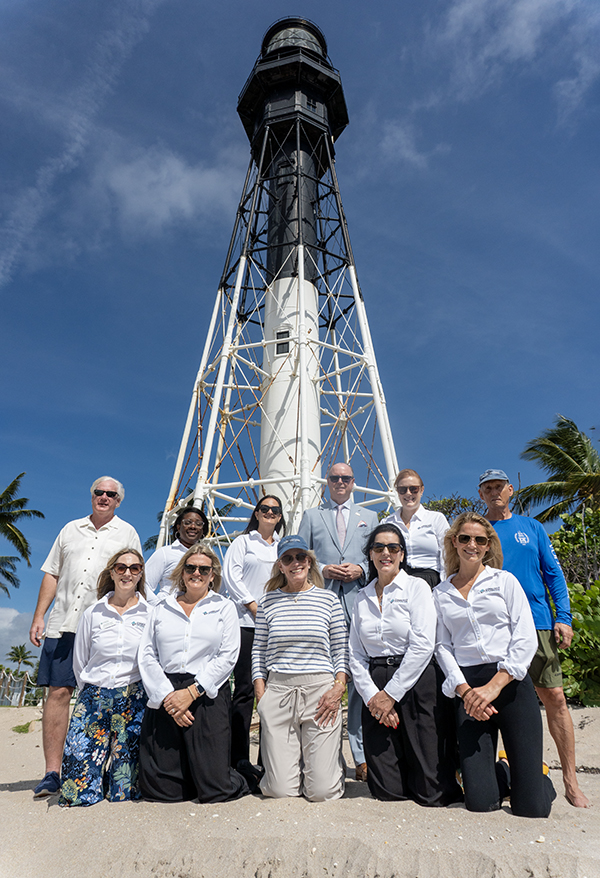
The Hillsboro Lighthouse Preservation Society is partnering with the Community Foundation of Broward to launch an endowment fund that will help ensure support for the lighthouse continues for generations to come.
Gifts of Cash The simplest way to make an immediate impact. Give online, by check, or through a pledge paid over several years.
Appreciated Assets Stocks, mutual funds, or other investments that have grown in value can be a smart way to give. By donating them directly, you may avoid capital gains tax and receive a deduction for the full market value.
Legacy Gifts Name the Hillsboro Lighthouse Preservation Society (HLPS) in your will or living trust to create a lasting legacy. A bequest costs you nothing today, and you can adjust it as your circumstances change.
Whichever path you choose, your generosity ensures the mission thrives for years to come. To get started, contact the HLPS development office, which can help you find the gift that fits your goals.
For a confidential conversation about
gifts of appreciated assets like stocks and real estate, contact Mary Margaret Doyle
at the Community Foundation at
954-761-9503 x116 or
mmdoyle@cfbroward.org. Please consult your financial or legal advisor about the tax implications of your gift.