Pompano Beach’s Fisher Family Pier: A Landmark Over the Atlantic
The Pompano Beach fishing pier is one of the city’s most recognizable landmarks — a place where the Atlantic Ocean, local history, beach culture and everyday recreation meet in one long walk over the water. Officially known today as the Fisher Family Pier, it stretches nearly 900 feet into the ocean and serves as a centerpiece of the Pompano Beach beachfront district. For adult visitors, the pier is more than a photo stop. It is a calm morning walk, a fishing platform, a place to watch the changing color of the water, a gateway to nearby dining and entertainment, and a reminder of how deeply Pompano Beach’s identity is tied to the sea.
Overview
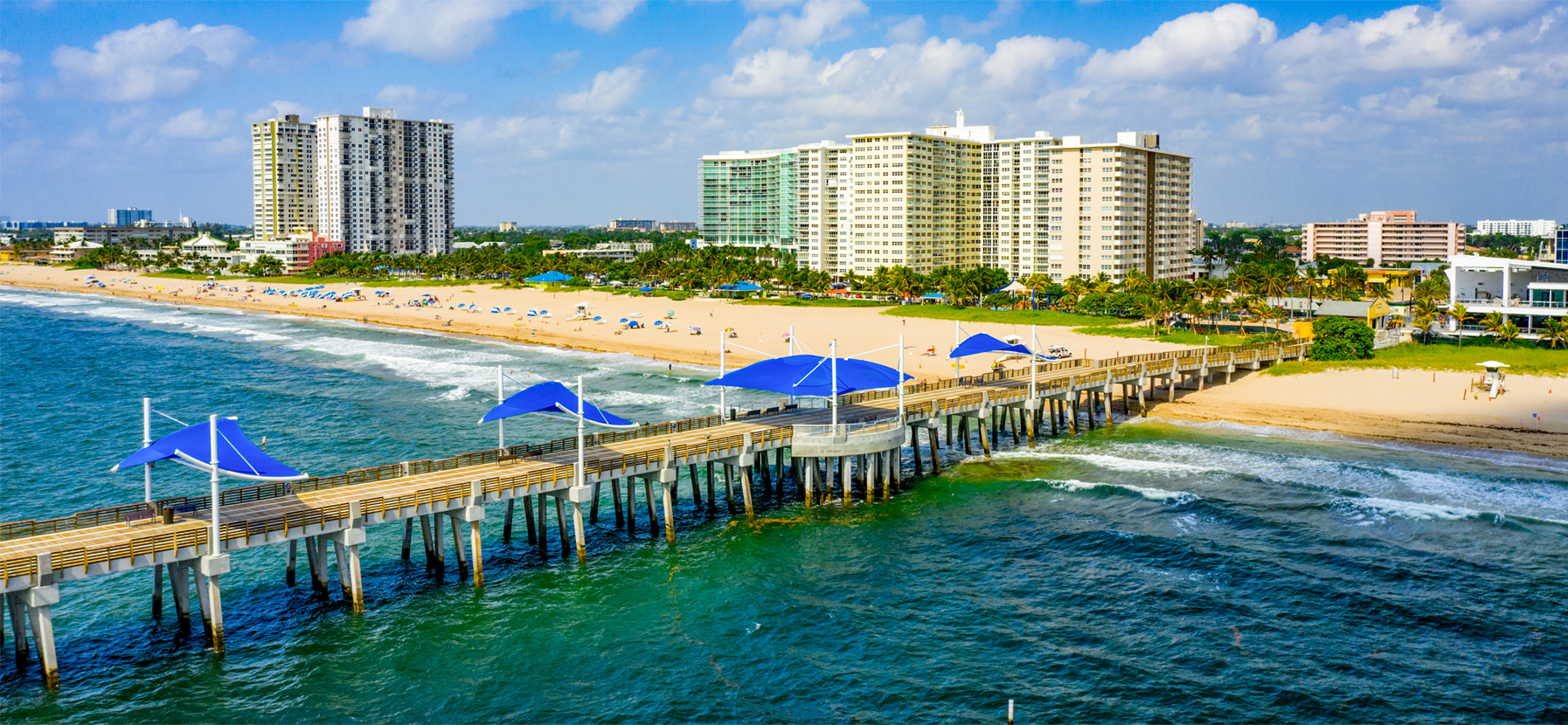
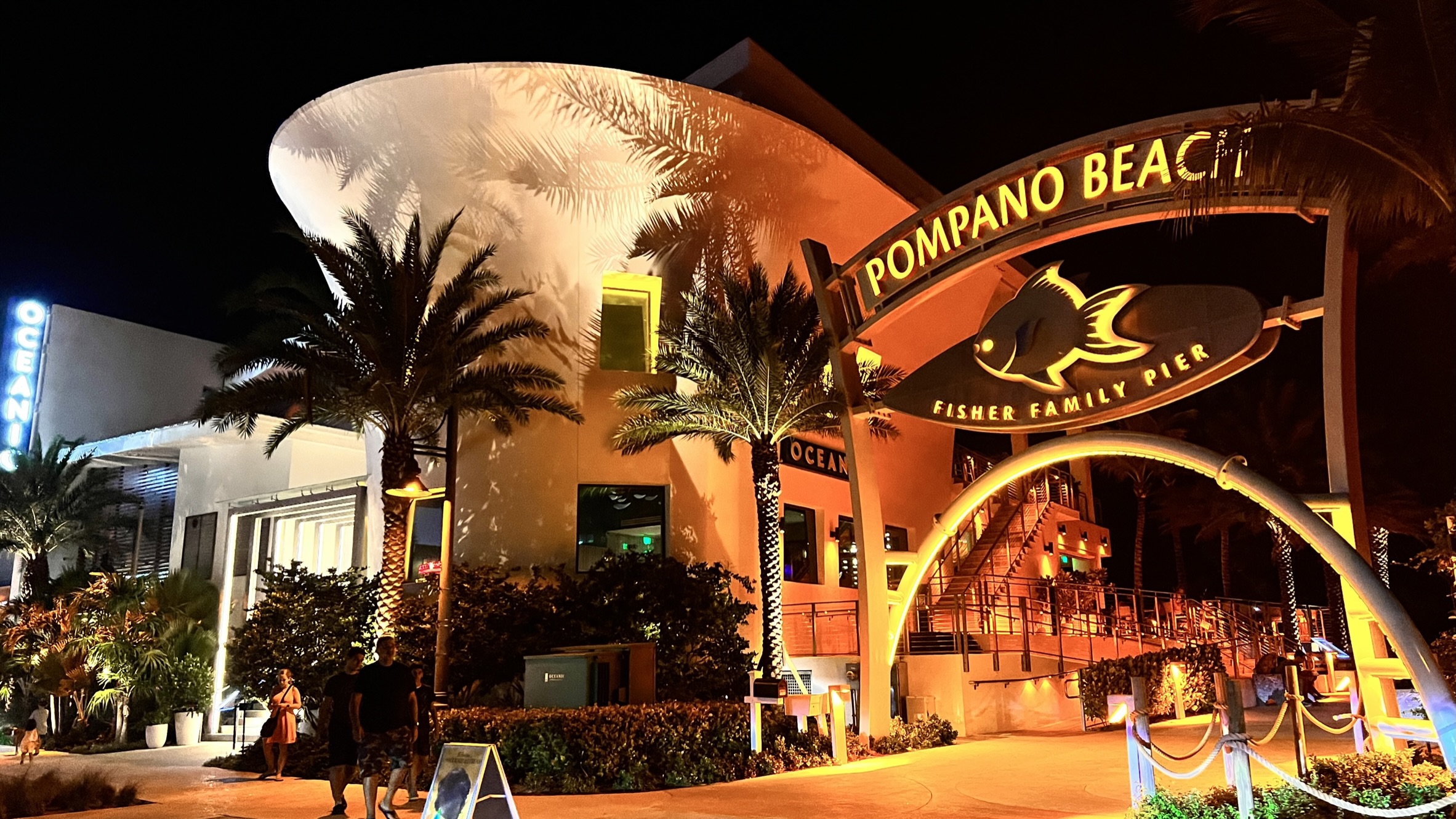
Located at the heart of the Pompano Beach oceanfront, the Fisher Family Pier is designed for both function and leisure. The structure reaches out over the Atlantic, offering sweeping views north and south along the beach, as well as a direct look into the clear coastal waters below. The city describes the pier as a “one-of-a-kind destination” with space for sightseeing, fishing and ocean viewing. Its most distinctive feature is the sculptural design at the end of the pier: a shape inspired by the pompano fish, the species from which the city takes its name.
For visitors staying in the beach district, the pier helps orient the entire area. It sits near restaurants, hotels, the beach promenade and the broader Pompano Beach Fishing Village, making it a natural starting point for a day or evening by the water. A morning visit may bring joggers, walkers and anglers setting up for the day. By late afternoon, the pier becomes a scenic overlook for people watching the light shift across the ocean. At night, the surrounding district offers a more social atmosphere, with nearby dining and nightlife adding energy to the waterfront.
The pier is named for the Fisher family, recognized for more than a century of civic service to Pompano Beach. The name particularly honors former Pompano Beach mayor and Broward County Commissioner Lamar Fisher, whose family roots in the area reach back generations. That naming gives the pier a civic meaning beyond recreation: it is a public gathering place tied to local leadership, continuity and memory.
What Visitors Do There
The pier’s most traditional function is, of course, fishing. Pompano Beach has long been associated with surf, pier and offshore fishing, and the pier gives anglers access to deeper water without requiring a boat. From the rail, people may target species moving along the coastline and around the structure, depending on the season, tides and conditions. The pier’s length allows anglers to spread out, while the open-air setting makes it accessible to visitors who want to experience coastal fishing in a relaxed public environment.
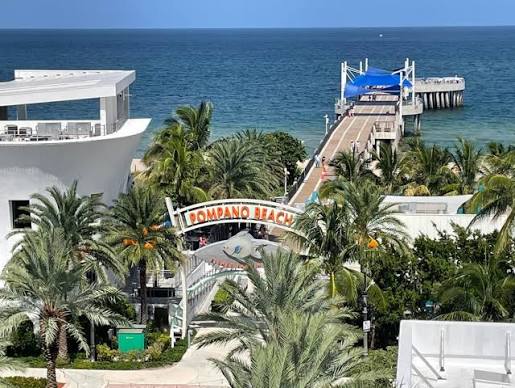
But fishing is only one part of the pier’s appeal. Many visitors come simply to walk. A stroll to the end of the pier offers a gradual change in perspective: first the sand and beachgoers fall behind, then the sounds of the shore soften, and finally the horizon opens in every direction. For adults visiting the city, this is one of the easiest ways to feel the geography of Pompano Beach — the beachfront, the Atlantic, the breeze, the color of the water and the long curve of coastline.
Sightseeing is another major activity. The pier offers excellent views of the ocean, the beach and the surrounding waterfront district. On clear days, the water can reveal shades of turquoise and blue that make South Florida’s coast so appealing. Visitors may see seabirds, passing boats, anglers at work and sometimes marine life near the pilings. The city’s pier information emphasizes sightseeing and sweeping ocean views as central parts of the experience.
Photography is also a natural use of the pier. The fish-shaped end, the sails overhead, the lines of the railings and the long view back toward shore all provide strong visual compositions. For visitors documenting a trip to Pompano Beach, the pier offers one of the city’s most identifiable backdrops.
The pier also functions as an informal gathering place. It is close to beach access, restaurants and the Fishing Village, so visitors can pair a pier walk with lunch, drinks, dinner or an evening out. This makes it especially well suited to adults who want a beach experience without spending an entire day in the sand. It is easy to visit the pier as part of a broader outing: morning coffee and a walk, afternoon beach time, sunset sightseeing or dinner nearby.
A History Rooted in the Waterfront
The history of the Pompano Beach fishing pier begins with the city’s longstanding relationship to the ocean. Pompano Beach developed as a coastal community where fishing, boating, beach life and tourism became central to local identity. The pier itself was originally built in 1963, giving it more than six decades of history as a public waterfront landmark.
For generations, the original pier served as a practical and symbolic extension of the city into the Atlantic. It gave residents and visitors a place to fish, walk and gather, and it helped define the beachfront district before the area’s more recent redevelopment. Like many oceanfront structures in South Florida, the pier had to withstand salt air, storms, changing safety standards and the wear that comes from heavy public use. Over time, the need for major improvement became clear.
The modern version of the pier emerged from the city’s broader effort to revitalize the beachfront and create the Pompano Beach Fishing Village. Enhancements to the pier began in 2019, according to the city’s Community Redevelopment Agency. The project was not simply a cosmetic renovation. The pier was rebuilt and improved with a stronger, more contemporary design. It was elevated to better withstand sea-level rise, widened to better accommodate both fishing and strolling, and enhanced with large overhead sails for shade.
Those changes matter because they reflect the evolution of the pier’s role. The old pier was primarily a fishing and sightseeing structure. The new Fisher Family Pier still supports those uses, but it is also part of a larger visitor experience. Its wider design allows anglers and walkers to coexist more comfortably. Its public art and fish-shaped end make it a civic landmark. Its connection to the Fishing Village links it to dining, entertainment and the city’s tourism economy.
The renovated pier was formally celebrated with a dedication ceremony on April 2, 2022, honoring Lamar Fisher and the Fisher family’s long service to the community. Local coverage noted that members of the Fisher family, whose history in the area spans six generations and more than 100 years, attended the grand opening celebration. This dedication linked the pier’s physical renewal to a broader story of local continuity.
Why It Matters to Visitors
For adult visitors, the Fisher Family Pier offers a compact version of what makes Pompano Beach appealing. It is relaxed but not sleepy, scenic but not remote, and historic without feeling frozen in the past. A visitor can fish, walk, take photos, enjoy the ocean breeze, observe local life and then continue into the nearby beach district for food or drinks.
The pier also gives visitors a clear sense of place. Many coastal cities have beaches, but not every beach has a landmark that so directly connects history, recreation, design and public life. The Fisher Family Pier does that for Pompano Beach. It recalls the city’s older fishing heritage while representing its newer investment in waterfront tourism and public spaces.
In a city increasingly known for its revitalized beachfront, restaurants, arts, events and ocean recreation, the pier remains the essential stop. It is the place to begin a visit, end a visit or pause in the middle of one. Stand at the far end, look back toward the shore, and the story of Pompano Beach becomes visible: a city shaped by the water, still building its future around the Atlantic.